Overview
With
Finsa SPA
Year
2023
Sector
Healthcare
Location
Milan, Italy
Valvpath: Easing the Appointment and Admission Process
Goal
The Gemelli Hospital, a major private healthcare provider in Italy, partnered with Finsa to enhance its specialized cardiology program, “Il Percorso Valvulopatia.” The project aimed to streamline the appointment system and improve the overall admission process for patients referred by regional physicians.
We set out to map the end-to-end journey for patients and medical staff, improve communication, and ensure greater transparency and coordination throughout the application process.
We set out to map the end-to-end journey for patients and medical staff, improve communication, and ensure greater transparency and coordination throughout the application process.
Role & Contributions
Finsa, as the main consulting partner, approached this project from an end-to-end service design perspective; from research to UX/UI design and development.
My role evolved over the course of the project, starting in the last part of the research phase and continuing through design and development. I contributed to the service definition and supported prototyping and testing. I shaped the user interface and microinteractions for both mobile and desktop applications, and I handled design handoff, usability testing, and iterative refinement.
My role evolved over the course of the project, starting in the last part of the research phase and continuing through design and development. I contributed to the service definition and supported prototyping and testing. I shaped the user interface and microinteractions for both mobile and desktop applications, and I handled design handoff, usability testing, and iterative refinement.
Process & Key insights
Unraveling Pain Points with Service Blueprinting
Service blueprinting was a key tool to visualize how physicians, patients, and hospital staff interacted within the system. It helped us pinpoint specific moments in the process that needed to be addressed, such as communication between patients and physicians and the application workflow itself. The resulting solution covered multiple touchpoints along the patient journey.
What did we learned from these findings?
- Application process – Neither doctors nor patients had a clear understanding of the status of application requests at any given time.
- Sensitive data handling – Hospital staff, doctors, and patients exchanged sensitive documents through various channels (email, WhatsApp, etc.) without a clear, standardised protocol.
- Admissions and priority – Patient admission to the program (based on disease severity) was managed via a paper questionnaire, creating inefficiencies and a lack of traceability.
Some of our main interventions
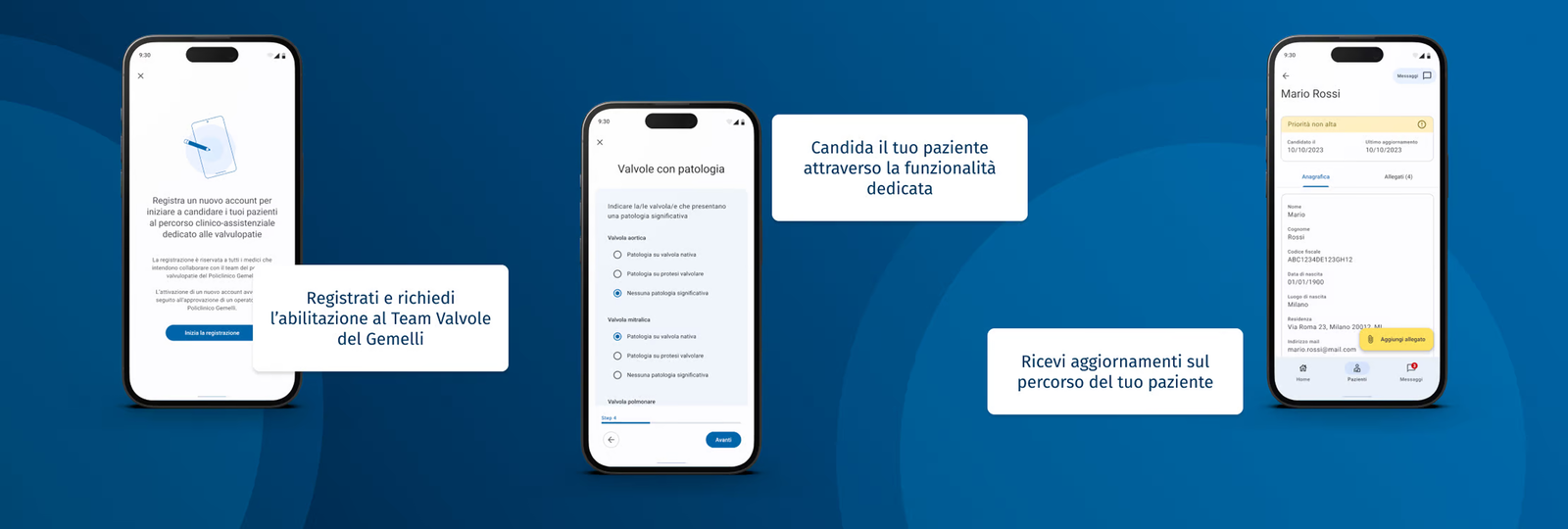
- Mobile App and desktop web-app – Designed and built for regional doctors to manage patient referrals to the program, but also for the cardiology team and hospital administrators to track and coordinate admissions.
- Application process - Physicians must fill out an application for their patients following a series of questions. The applications process follows a simple flow that allows hospital's medical staff to quickly screen the patients’ profile.
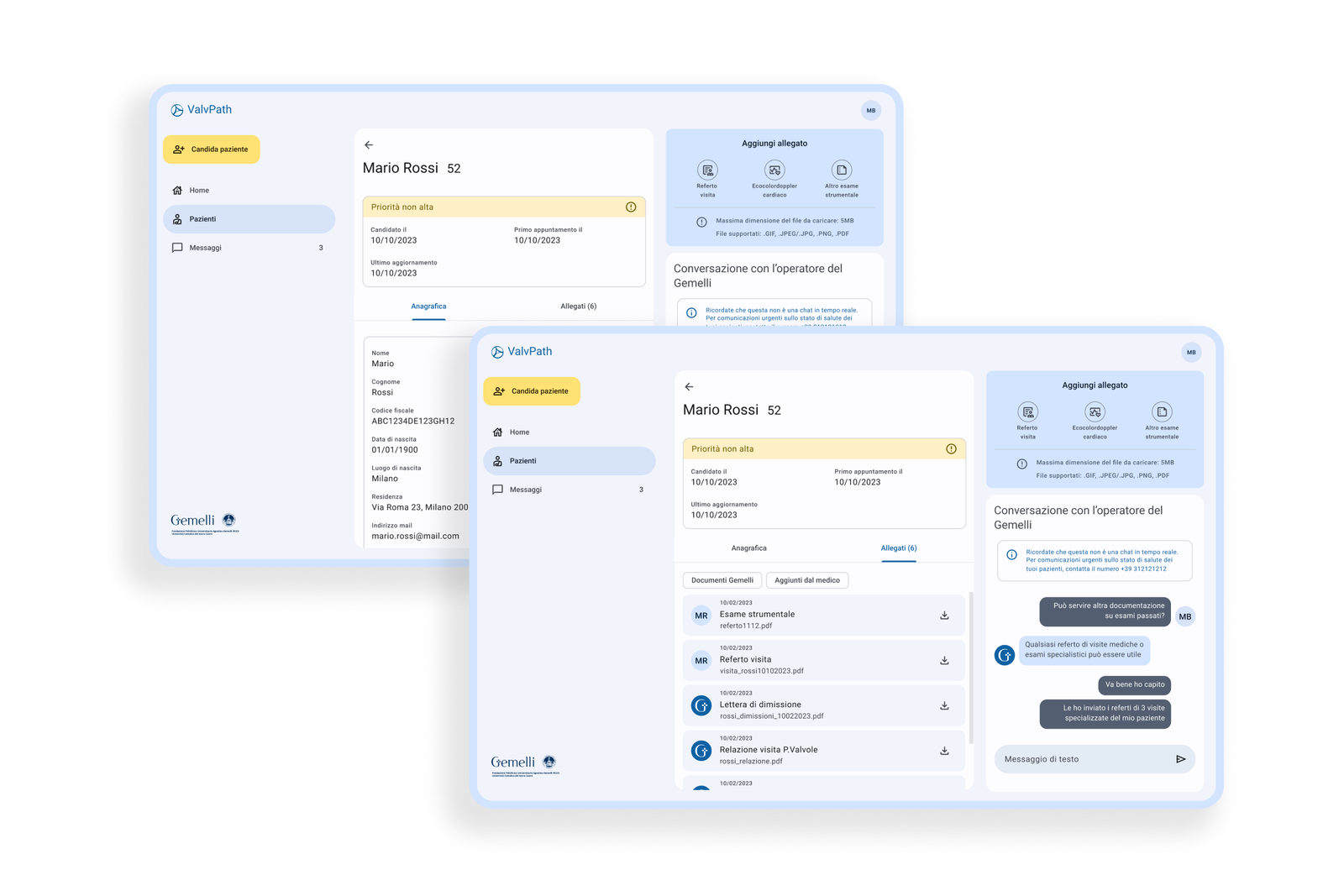
- Patient page - The platform is design to keep patients profiles and display them in an easy-to-follow section containing their main information, communication with the hospital staff and important documents.
- Quick links - Quickly switch between the communication page and the patients’ basic information.
Key Takeaways
The discovery phase was crucial in revealing inefficiencies in the existing application system and clarifying where to intervene. A more structured, step-by-step process helped reduce complexity during admissions, while more transparent communication tools improved the experience for all stakeholders involved.
© designed + coded by ismael godinez | 2025